
Riccardo Drigo "The Talisman" Ballet in 3 acts. Performance by the Buryat Academic Opera and Ballet Theatre
Ticket resale service. Prices may be higher or lower than face value.
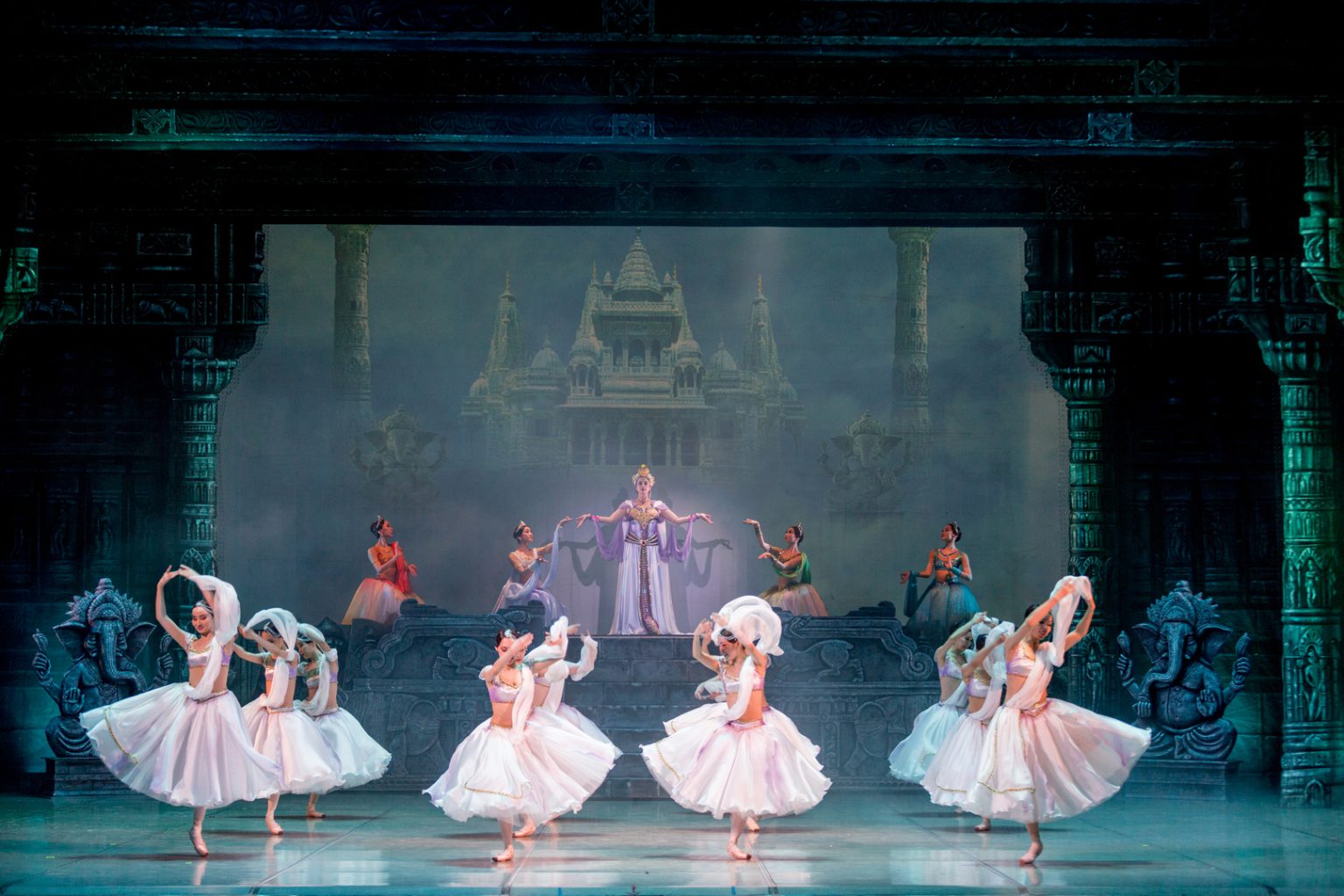
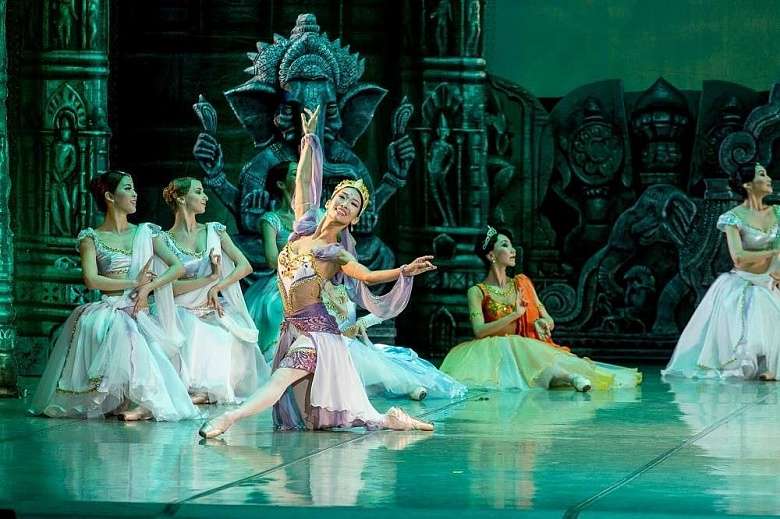
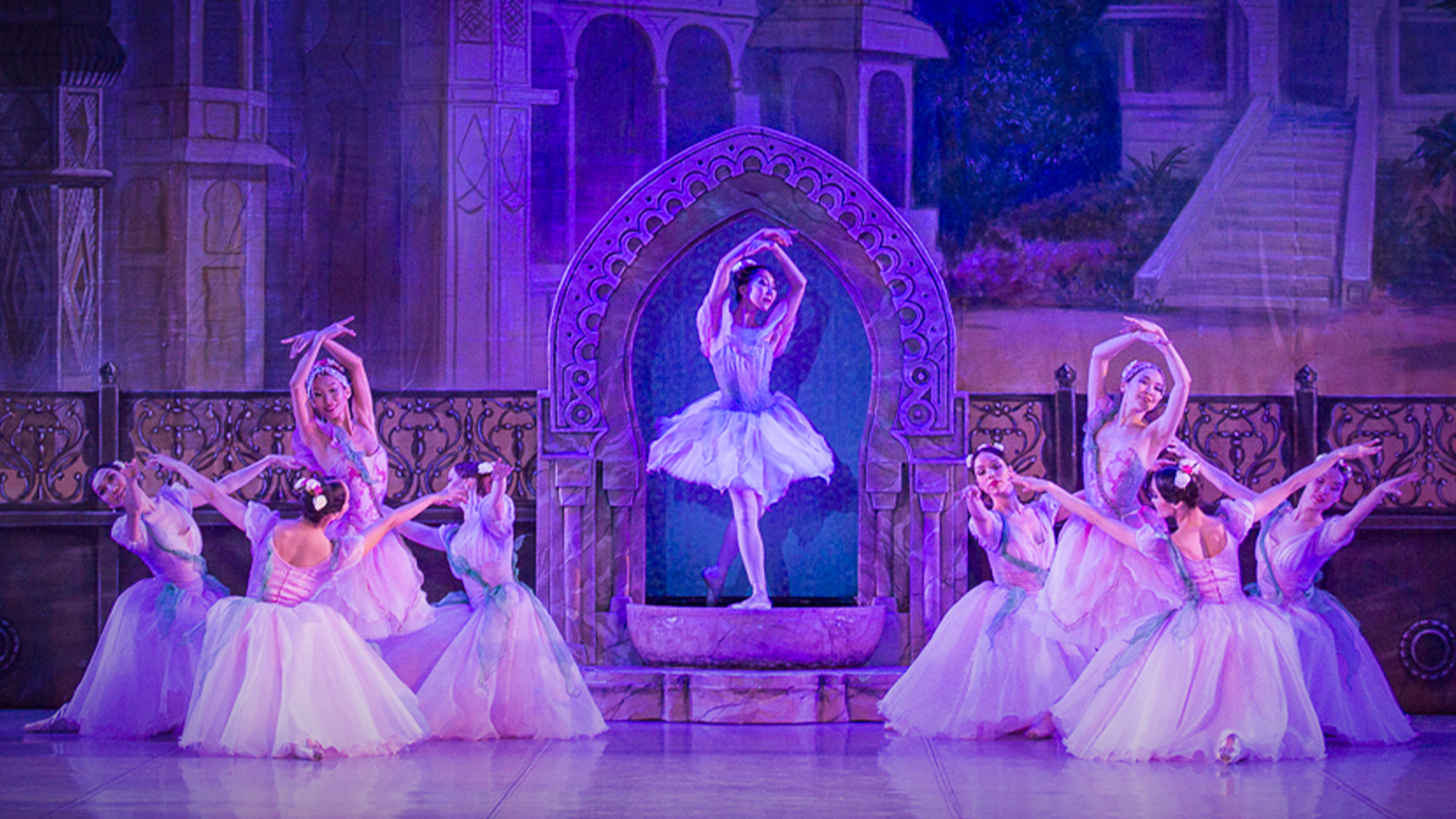
Premiere of this production: 27 Oct 2025 The performance has 2 intermissions Running time: 2 hours 25 minutes The Stanislavsky Theatre, located in XIX century historical building just 750 metres (9-minute walk) from the Bolshoi, proudly presents the ballet "The Talisman" production on its stage. This production, based on the music of Riccardo Drigo, is unique in the Russian theatre landscape: the ballet has not been staged for more than a century. By bringing it back to the stage, the Buryat Opera and Ballet Theatre offers audiences a rare gem of ballet art, underscoring both its mastery and its commitment to tradition. Ballet at the Stanislavsky Theatre is the great and affordable alternative to the Bolshoi. The ballet The Talisman, created by Marius Petipa and composer Riccardo Drigo in 1889, disappeared from the stage after 1926, when it was last performed at the Leningrad Choreographic School. That final performance became a triumph for the young Olga Jordan and Alexei Yermolaev, whose virtuoso dancing laid the foundation for a new ballet aesthetic of the 20th century, where technique reached unprecedented heights. A century later, Alexander Mishutin—a graduate of the Moscow Choreographic School who spent many years working in Japan—undertook to bring The Talisman back to life. Using surviving materials (including a piano score preserved in Japanese archives), he rejected a straightforward reconstruction in the spirit of modern restoration practices and instead chose the path of creative interpretation, following in the footsteps of Pierre Lacotte’s revival of Don Juan. Mishutin shortened the libretto from four acts to three, removing excessive pantomime while preserving the dramatic core: the love story between Niriti, daughter of the goddess, and the Maharajah Nuredin, and his conflict with the abandoned bride Damayanti, Princess of Delhi. The new staging draws on Petipa’s heritage and other great classical ballets: La Bayadère by Ludwig Minkus for its ethnographic color, Adolphe Adam’s Le Corsaire for ensemble dynamism, and Cesare Pugni’s The Pharaoh’s Daughter for monumental group scenes. Mishutin created a “dance marathon” in three acts, where the corps de ballet fully demonstrates its precision, while the soloists take on not only leading roles but also demi-soloist parts—continuing Petipa’s tradition that every artist must be a true universalist. Drigo’s music, still valued today for its theatricality and rhythmic richness, proved the key to success. The theatre’s orchestra reveals the “charm of forgotten melodies,” reminding audiences that Drigo was a master of “music for the body,” where every chord underscores movement and dramatic development. The production at the G. Tsydynzhapov Buryat State Opera and Ballet Theatre confronts a paradox: contemporary audiences are less captivated by a story of a maharajah’s love, yet they are fascinated by “technical brilliance” and “plastic elegance.” Mishutin, in line with his Japanese colleagues, highlights the “laws of academic ballet”—reworking choreographic leitmotifs, pantomime patterns, and scene structures into a single score of movement, where “monotony is softened by artistry.” The company has created a production where “experience transcends formal technique.” The dancers have shown that the Buryat ensemble is capable of realizing even the most large-scale works. The performance has become a symbol of continuity—just as the theatre’s Angara the Beauty (1959) combined “national motifs” with academic rigor, so too does The Talisman unite tradition with innovation. Together, Alexander Mishutin and Morihiro Iwata saw in The Talisman a “modern longing for the past,” transforming the ballet into a cultural metaphor: that which was forgotten can become a talisman for the revival of interest in the classics. As critic Igor Koryabin noted, this is “an example of how art can be reborn through bold experimentation.” Today, The Talisman is not merely a retrospective project but “an experiment on the edge”: a forgotten score by Drigo colliding with contemporary choreography, a theatre company revealing its full artistic potential, and a production capable of restoring this ballet to the Moscow repertoire. Its revival is a reminder that the classics live on as long as there are masters willing to reimagine them. In 2020, the Buryat State Opera and Ballet Theatre was nominated for the prestigious Golden Mask National Theatre Award in several categories for the first time in its history. The Talisman was presented in Moscow at the festival of nominees and was shortlisted in the category Ballet. Choreographer Alexander Mishutin received an individual nomination for his work, while ballerina Anna Petushinova, who danced the leading role of Niriti, was nominated for Ballet / Contemporary Dance: Best Female Role. Production Team: Cast: Elemental Spirits: | |||||